
A balanced trip combines memorable sightseeing with enough flexibility to enjoy each destination without feeling constantly rushed. The most effective approach is to organise activities around energy levels, realistic transfer times and recovery opportunities rather than filling every available hour with attractions.
This becomes especially important on multi-stop holidays. Moving between cities, checking into hotels and navigating unfamiliar transport systems can take more effort than expected. Even a carefully researched itinerary may become exhausting when its schedule ignores these less visible demands.
Start by choosing a manageable number of accommodation bases, alternating demanding days with lighter ones and protecting free time around transfers. Treat downtime as part of the holiday rather than unused capacity. A quiet afternoon in a neighbourhood café, a relaxed walk or an unplanned evening can be as worthwhile as another museum.
The objective is not to see less indiscriminately. It is to make deliberate choices about where to spend time and energy, while keeping enough flexibility to respond to changing circumstances.
How to build a balanced travel itinerary
- Limit unnecessary hotel changes and calculate transfers from door to door, not simply between stations or cities.
- Alternate active sightseeing days with moderate and recovery days, especially around long journeys.
- Book essential travel arrangements early while protecting flexible time for rest, family needs and spontaneous discoveries.
- Why Does Changing Hotels Every Night Make a Holiday Exhausting?
- How to Alternate Active and Relaxed Days on a Ten-Day Itinerary?
- One Base or Three Stops: Which Works Better for a Week in Tuscany?
- The Transfer-Time Mistake That Can Ruin a Multi-City Itinerary
- Where Should You Add Free Time to a Packed Family Holiday Schedule?
- Why Do Long Journeys Cause Stiffness Even in Spacious Seats?
- How to Read Metro Maps and Make Connections in a Foreign City?
- How Far in Advance Should You Book Hotels, Activities, and Holiday Transport?
Why Does Changing Hotels Every Night Make a Holiday Exhausting?
Changing hotels every night is exhausting because each move creates more work than travelling between two destinations. Packing, checking out, transporting luggage, finding the next accommodation and settling in repeatedly consume both time and attention. Even short journeys can become tiring when travellers never spend long enough in one place to establish a comfortable routine.
The hidden cost starts before departure. Travellers must organise their belongings, check checkout requirements, arrange luggage storage if necessary and reach the next transport connection. After arrival, they may need to locate their hotel, wait for room access and become familiar with a different neighbourhood.
These tasks create two distinct kinds of fatigue. Physical fatigue comes from walking, lifting luggage, carrying bags and travelling. Decision fatigue comes from repeatedly making logistical choices: which route to take, where to eat, when to leave and what to do with luggage.
Repeated decisions can make ordinary travel inconveniences feel disproportionately frustrating, particularly when travellers are already tired.
Changing accommodation also interrupts the recovery routine. A familiar hotel allows travellers to return without much planning, leave belongings organised and spend the evening relaxing. With nightly moves, evenings often become preparation sessions for the following morning.
A useful planning exercise is to mark every morning that starts with packing or checking out. If more than one-third of the trip’s mornings involve moving accommodation, treat this as a practical warning sign rather than a scientifically established threshold.
Consider a hypothetical nine-night holiday with accommodation changes on six mornings. The itinerary may offer considerable geographical variety, but it also requires six rounds of packing and relocation. Removing two stops could provide more time for sightseeing without reducing the number of destinations visited on day trips.
Nightly hotel changes are not always inappropriate. A road trip through remote areas may genuinely require frequent stops. The important distinction is whether moving accommodation adds meaningful travel value or merely follows the order of attractions on a map.
Once the number of accommodation moves is manageable, the next task is distributing sightseeing effort across the remaining days.
How to Alternate Active and Relaxed Days on a Ten-Day Itinerary?
A balanced ten-day itinerary works best when demanding sightseeing days are separated by moderate or recovery days. Classify each day by expected effort before assigning attractions. This prevents several long walking days, early departures or transfers from accumulating together and leaves space to adjust plans as energy levels change.
Use three planning categories:
- High-intensity days: Extended sightseeing, demanding hikes, multiple attractions or substantial walking.
- Moderate days: One main attraction, manageable local exploration and a flexible afternoon.
- Recovery days: A late start, a short enjoyable outing and generous unscheduled time.
Recovery days do not need to be completely empty. A slow breakfast, a visit to a local market, an afternoon by the pool or time in a café can provide enjoyable experiences without requiring a rigid schedule.
The following is a hypothetical ten-day structure. It assumes a trip with sightseeing, one inter-city transfer and enough flexibility to adjust individual activities.
| Day | Intensity | Suggested programme |
|---|---|---|
| 1 | Recovery | Arrival, check-in and local walk |
| 2 | High | Major sightseeing attractions |
| 3 | Moderate | One main attraction and free afternoon |
| 4 | High | Full-day excursion or longer walking route |
| 5 | Recovery | Late breakfast and flexible local activities |
| 6 | Moderate | Transfer and simple evening plans |
| 7 | High | Main sightseeing day at the new destination |
| 8 | Moderate | Neighbourhood exploration and relaxed afternoon |
| 9 | High | Final major excursion or attraction |
| 10 | Recovery | Departure preparation and onward travel |
This sequence is a planning example, not a universal formula. Travellers arriving after an exhausting overnight journey may need more recovery time, while those with shorter journeys can reasonably start sightseeing sooner.
The middle of a holiday deserves particular attention. Initial excitement may conceal accumulating tiredness until several demanding days have passed.
On day four or five, reassess the schedule. If enthusiasm, concentration or energy has noticeably declined, exchange an upcoming high-intensity day for a lighter one wherever booking conditions allow.
Protect the most important experiences, but avoid treating every planned attraction as an obligation.
A well-paced daily schedule is only one part of a manageable holiday. The geographical arrangement of accommodation can either support that rhythm or undermine it through unnecessary journeys.
One Base or Three Stops: Which Works Better for a Week in Tuscany?
For a week in Tuscany, one accommodation base usually offers simpler logistics, while three stops provide easier access to different areas and their evening atmosphere. Neither arrangement is automatically better. The right choice depends on destinations, transport, luggage, group needs and the amount of daily backtracking required. Two bases can offer a practical compromise.
Tuscany illustrates the importance of separating geographical proximity from convenient transport access. Florence is a major rail hub, but not every attractive Tuscan town has a railway station.
According to Visit Tuscany‘s information on regional train travel, Florence connects directly by rail with destinations including Siena, Pisa, Lucca and Arezzo. Some hill towns, including San Gimignano, Volterra and Pienza, require additional transport arrangements.
Consequently, choosing a single base near a railway hub can be convenient for certain city visits while being less practical for a holiday focused on rural landscapes and smaller villages.
| Planning criterion | One base | Three stops |
|---|---|---|
| Unpacking | Once | Three separate arrivals and unpacking routines |
| Daily transport | Potentially more return journeys | Potentially shorter journeys near each stop |
| Evening atmosphere | Primarily around one town | Opportunity to experience several locations overnight |
| Backtracking | May require returning along familiar routes | May reduce repeated travel across the region |
| Logistical effort | Lower accommodation-management burden | More check-ins, luggage handling and departure planning |
For travellers primarily interested in Florence and rail-connected towns, one well-chosen base may be sufficient. For those planning countryside walks, photography at different times of day or visits to remote villages, a second location could make the itinerary more efficient.
A two-base itinerary deserves consideration when the longest day trips repeatedly involve substantial backtracking. Compare the total travel burden of staying in one place against the inconvenience of one additional hotel change.
For example, a hypothetical itinerary could divide the week between Florence and a location closer to the southern Tuscan countryside. This would provide access to distinct areas without requiring a move every other night.
Group composition also matters. Families with young children, travellers using mobility equipment and people carrying substantial photography or hiking gear may find packing and relocating particularly demanding.
Before choosing a base, check actual transport schedules, station locations, onward buses and parking arrangements for the intended dates. A destination that looks close on a regional map is not necessarily a comfortable day trip.
Whichever accommodation structure is chosen, accurate door-to-door travel estimates are essential. Underestimating transfers can undo the benefits of an otherwise sensible itinerary.
The Transfer-Time Mistake That Can Ruin a Multi-City Itinerary
The most damaging transfer-time mistake is treating the advertised train, flight or driving duration as the total time required to change destinations. A multi-city transfer also includes reaching terminals, navigating stations, waiting, handling luggage and travelling to the next accommodation. Ignoring these steps can turn a seemingly relaxed day into an exhausting sequence of deadlines.
A train journey advertised as taking one hour may occupy a much larger part of the day when hotel checkout, transport to the station, platform navigation, arrival procedures and the final journey to accommodation are included.
The exact additional time depends on the destination, transport system, travel conditions and personal requirements. It should be calculated rather than assumed.
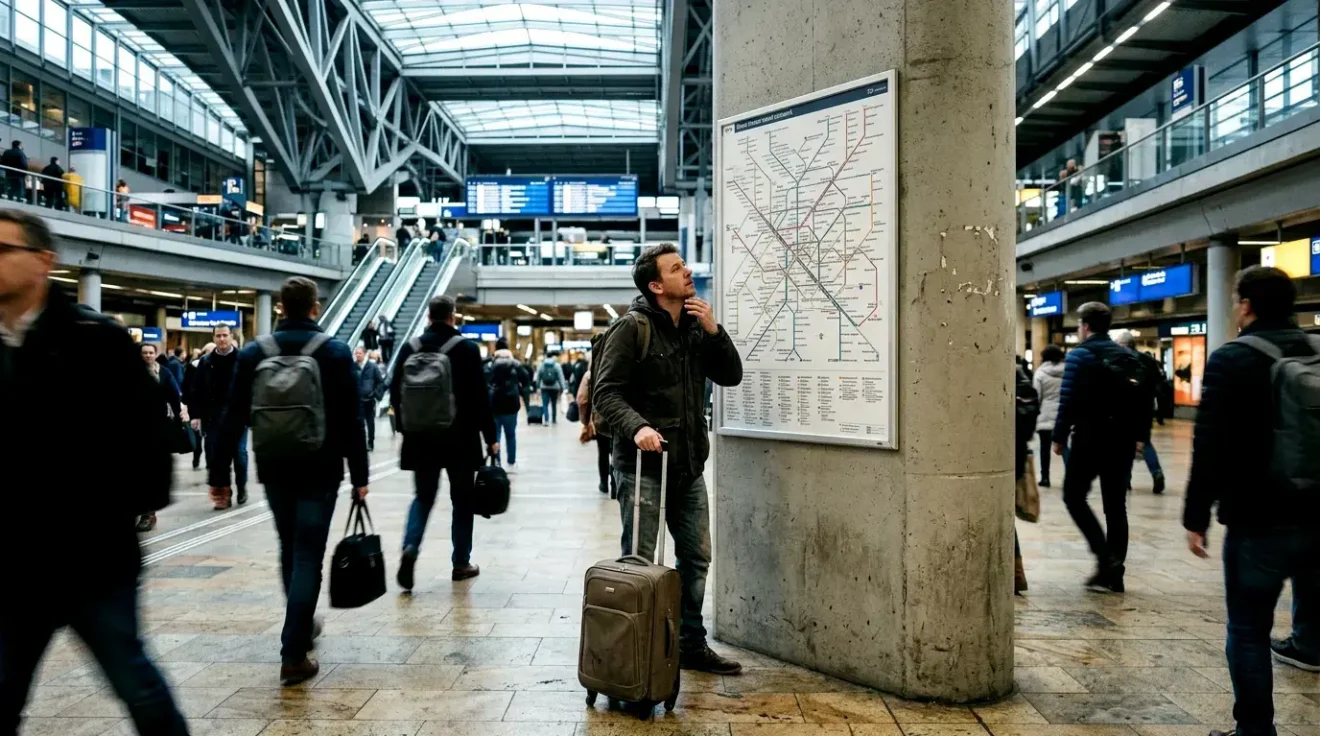
Build transfer estimates around the complete journey. The relevant unit is not station-to-station travel but the period between leaving one accommodation and becoming available for activities at the next destination.
Connection planning also requires appropriate margins. National Rail information on changing trains explains that its journey planner incorporates station-specific minimum interchange times and allows travellers to request longer connections.
This guidance concerns Britain’s National Rail network. Other transport systems have different connection rules, and minimum interchange allowances should not automatically be treated as comfortable margins for sightseeing travellers with luggage.
A particularly risky arrangement is booking the day’s only non-refundable activity shortly after an inter-city journey. Even a minor delay can threaten the reservation and create unnecessary pressure.
Keep the first part of a moving day available for departure logistics and the period immediately after arrival flexible. When a fixed booking is unavoidable, allow for realistic disruption and check what happens if the connection is missed.
Five checks before confirming a multi-city transfer
- Map the complete route: Record the journey from the first accommodation to the next, including station access and local transport. Deliverable: a door-to-door route outline.
- Check connection requirements: Identify station changes, interchange arrangements and luggage constraints. Deliverable: a transfer checklist for each connection.
- Add contingency time: Allow for realistic delays based on the route and available services. Deliverable: an adjusted arrival window.
- Audit fixed reservations: Identify activities and check-in arrangements that would be affected by late arrival. Deliverable: a list of potentially conflicting bookings.
- Prepare an alternative: Check the next available service, relevant ticket conditions and accommodation contact details. Deliverable: a short disruption plan.
A transfer day should normally count as a day with meaningful logistical effort, even when no major attractions appear on the schedule. This is especially important for groups managing several bags or passengers with different mobility needs.
Reducing transport pressure creates valuable space for rest. For families, deciding where that space belongs requires additional attention to children’s needs and preferences.
Where Should You Add Free Time to a Packed Family Holiday Schedule?
Family holidays benefit most from free time immediately after arrival, during late afternoons and following demanding transfer days. These periods provide opportunities to recover without sacrificing the most important sightseeing experiences. Instead of reserving one rest day at the end, distribute flexible periods throughout the holiday so the schedule can respond to changing energy levels and family priorities.
Late afternoons are particularly useful. After a morning of walking, museums or organised activities, children may have less patience for complicated logistics or another structured visit.
Leaving afternoons flexible creates room for a park, swimming pool, quiet snack or early return to the accommodation. The activity can remain enjoyable without becoming another obligation.
Arrival days deserve similar protection. Families may need time for meals, familiarisation, unpacking or simply adjusting to a different environment. Scheduling major attractions immediately after arrival leaves little margin when transport takes longer than expected.

A useful practical approach is to include at least one substantial flexible period for every two days of planned family activities. This is a scheduling heuristic, not a universal requirement. Younger children, travellers with additional support needs and families facing long transfers may need more frequent breaks.
Free time can also be structured without being scheduled. Before travelling, identify a few convenient options near each accommodation: a playground, shaded park, swimming facility or pedestrian area.
Knowing these possibilities in advance avoids having to research alternatives while children are already tired. It also gives the family choices without imposing an additional fixed commitment.
Another useful technique is to let different family members select occasional activities. One child might prefer an aquarium, another a park, while adults may prioritise a cultural attraction.
Agreeing on a limited number of individual preferences can make the itinerary feel more inclusive, particularly when not every activity appeals equally to everyone.
Flexible periods should remain genuinely optional. Avoid filling them with backup attractions that gradually become expected appointments.
Family pacing also depends on the physical effects of travel itself. Long periods spent sitting can leave travellers uncomfortable even when the journey appears relatively effortless.
Why Do Long Journeys Cause Stiffness Even in Spacious Seats?
Long journeys can cause stiffness because remaining in one position limits normal muscular movement, regardless of how spacious the seat feels. Comfortable seating may reduce pressure and improve the experience, but it does not replace regular movement. Prolonged sitting can leave travellers feeling tight or uncomfortable when they finally stand, walk or carry luggage.
When travelling by plane, train, coach or car, the body may remain relatively still for extended periods. Muscles receive fewer opportunities to move through their normal ranges, while the legs spend considerable time in a dependent or bent position.
Ordinary muscular stiffness should be distinguished from potentially serious circulation problems. The mechanisms and medical implications are not identical.
The CDC advice on blood clot risks during travel explains that journeys lasting more than four hours can increase the risk of blood clots, partly because prolonged immobility affects circulation. The agency also notes that the overall risk for most travellers is generally small.
More than 4 hours
The journey duration highlighted by the CDC in its discussion of travel-associated blood clot risk. This does not mean that a shorter journey is risk-free or that ordinary muscular stiffness is a blood clot.
Centers for Disease Control and Prevention (CDC), Understanding Your Risk for Blood Clots with Travel.
Practical comfort measures include moving the ankles, gently exercising calf muscles, changing position when possible and taking opportunities to stand and walk when conditions permit.
On road journeys, suitable rest stops can provide opportunities to move. Train passengers may be able to walk through the carriage when safe, while airline passengers should follow cabin crew instructions and keep aisles clear when required.
Maintain normal hydration according to personal needs and travel conditions. Drinking water supports general wellbeing, but hydration alone should not be presented as a proven method of preventing travel-associated blood clots.
Itinerary design matters after arrival as well. Scheduling a strenuous walking tour immediately after an overnight journey may leave little opportunity to recover from poor sleep or prolonged sitting.
A low-intensity arrival day is therefore a sensible comfort-focused planning choice, although it is not a medical rule or a guaranteed prevention strategy.
Travellers with previous blood clots, recent surgery, pregnancy, limited mobility or other relevant medical risk factors should seek individual medical advice before long journeys where appropriate.
Unexplained leg swelling, pain, warmth or skin discoloration warrants prompt medical assessment. Sudden breathing difficulties, chest discomfort or fainting may indicate an emergency requiring immediate medical assistance. These symptoms should not be treated as ordinary stiffness.
Once travellers are ready to explore, another source of avoidable fatigue is navigating unfamiliar urban transport systems without allowing enough time for connections.
How to Read Metro Maps and Make Connections in a Foreign City?
Reading a metro map becomes easier when travellers identify their starting station, destination, line direction and interchange points before boarding. Most metro diagrams prioritise network clarity rather than geographical accuracy, so stations that look far apart may be close on the surface. Understanding this distinction prevents unnecessary journeys and helps create more realistic sightseeing schedules.
A metro map represents how lines connect, not necessarily how streets, neighbourhoods or stations are positioned geographically.
The London Transport Museum‘s explanation of the Tube map illustrates this principle: central areas are deliberately enlarged on the diagram to make complex connections easier to understand. This is why travellers should cross-check walking routes using a geographically accurate map.
Before choosing the metro, compare the complete journey with the walking alternative. Two nearby attractions may be easier to reach on foot than by descending into a station, waiting for a train and navigating an interchange.
When the metro is appropriate, use a consistent reading method:
- Find the departure station and destination station.
- Identify the line connecting them or the interchange stations required.
- Check the direction of travel using the line’s terminus or destination information.
- Confirm the platform and any service changes on current station signs.
- At the interchange, follow the signs for the next line and its correct direction.
Do not rely exclusively on line colours. The same colour may appear on branches, and some networks use service patterns that require checking the destination shown on the train.
Journey-planning apps are valuable, but their displayed durations should be checked against the complete passenger experience. Depending on the app and route, estimates may account for some walking and interchange time while overlooking other practical delays, such as purchasing tickets or navigating an unfamiliar entrance.
Allow additional time when stations are large, lifts are required, ticket arrangements are unfamiliar or several transfers are involved.
Also identify fallback transport options for important journeys. Service disruptions, temporary closures or missed last trains can affect evening plans.
Before relying on the metro for a late return, check operating hours, any available night buses and suitable licensed taxi or local ride services. The right alternative depends on the city and travel date.
Accurate local navigation makes sightseeing more manageable, but the final balance also depends on how early the itinerary becomes locked by reservations.
Key takeaways before booking
- Identify which reservations genuinely restrict the itinerary before committing to the order of destinations.
- Protect flexibility where energy levels and transport disruptions are hardest to predict.
- Compare cancellation terms carefully: booking early with refundable conditions is different from leaving arrangements unbooked.
How Far in Advance Should You Book Hotels, Activities, and Holiday Transport?
Hotels, activities and holiday transport should be booked according to availability constraints rather than a universal number of months before departure. Reserve essential, capacity-limited arrangements early enough to secure the itinerary, then leave optional activities and recovery periods flexible. The right timing depends on season, destination, cancellation rules and how much uncertainty the traveller can accept.
A balanced itinerary works best when reservations are divided into three practical priority levels.
| Booking priority | Typical arrangements | Planning approach |
|---|---|---|
| High | Essential inter-city transport, first and last nights, capacity-limited attractions | Check availability and secure arrangements once travel dates and essential plans are established |
| Medium | Intermediate accommodation, popular restaurants, optional guided excursions | Book once the route and realistic daily rhythm have been reviewed |
| Flexible | Neighbourhood walks, parks, casual meals, optional local experiences | Leave open where access and availability permit |
These categories are not fixed rules. A small hotel during a major festival may require earlier booking than a particular transport service, while a popular timed attraction may sell out before the rest of the holiday has been arranged.
Accommodation for the first and last nights often deserves particular attention. Arrival and departure dates are relatively fixed, and uncertainty around these nights can complicate transport planning.
For multi-stop itineraries, essential connections should also be reviewed early. A journey between cities may determine whether a planned overnight stop is practical or whether an additional base creates too much travel.
However, booking every attraction immediately can create a different problem: an itinerary that becomes difficult to adjust once actual energy levels are known.
Where possible, establish the main travel anchors first and then reserve optional experiences after checking the schedule for consecutive demanding days.
It is also important to distinguish two forms of flexibility:
- Flexibility at booking: Making an early reservation with cancellation or modification conditions that preserve options.
- Flexibility by delay: Waiting to reserve until plans are more certain, while accepting potential availability or price changes.
Neither approach is automatically superior. A refundable booking may protect availability, but its cancellation deadline, conditions and possible price difference must be evaluated. Waiting may be reasonable for widely available options but risky for capacity-limited arrangements.
Before paying, check cancellation deadlines, non-refundable deposits, change fees, transport ticket restrictions and whether different components of the trip are covered by separate conditions.
The best booking strategy preserves a stable itinerary framework without eliminating opportunities to adjust daily activities.
Take the next practical step by marking essential reservations, optional activities and unscheduled recovery periods on the same itinerary. Confirm the critical bookings first, then review the schedule for unnecessary hotel changes, unrealistic connections and consecutive demanding days. A holiday is better balanced when its most important experiences are protected without making every hour compulsory.
How many activities should be planned per day on holiday?
There is no ideal number for every destination or traveller. A practical approach is to choose one main activity and add optional experiences only when their location, duration and physical demands make them realistic. Several nearby attractions may fit comfortably into one day, while a demanding hike or distant excursion could reasonably occupy the entire schedule.
Is it better to leave an entire day free or schedule shorter breaks?
Both approaches can work. Short daily breaks help prevent continuous rushing, while a full recovery day may be useful after several demanding activities or a particularly tiring journey. For multi-stop holidays, distributing flexible periods around transfers and busy days is often more practical than relying on one rest day at the end.
How can travellers avoid feeling guilty about missing attractions?
Separate essential experiences from optional ones before travelling. Prioritise attractions that genuinely matter and treat everything else as an opportunity rather than an obligation. A relaxed meal, unplanned walk or quiet afternoon is part of experiencing a destination, not evidence that the itinerary has failed.
Should a travel day count as a sightseeing day?
A travel day can include sightseeing, but its available time should be calculated after accounting for the complete transfer, luggage arrangements and potential delays. Short local activities may be reasonable following an uncomplicated journey. Demanding excursions or tightly timed bookings are less suitable when arrival conditions are uncertain.
What should be removed first when an itinerary feels too crowded?
Start with optional attractions requiring substantial detours, repeated journeys or strict departure times. Then examine whether any overnight stops can be replaced with day trips. Preserve the experiences that motivated the holiday and protect enough free time to enjoy them without constantly preparing for the next destination.