Finding authentic local experiences begins with a different question: not which neighbourhood tourists have overlooked, but where visitors can participate in everyday life without disrupting it. A community-run workshop, a public sporting event or a conversation with a market trader may reveal more about a destination than another carefully packaged attraction.
Yet authenticity is not simply the absence of tourists. Cultural performances can carry genuine meaning, guided experiences can create valuable exchanges, and apparently ordinary residential streets can become uncomfortable places when visitors treat their inhabitants as attractions. The quality of an encounter depends on who welcomes visitors, who controls the activity and who benefits from their presence.
For curious travellers, the practical approach is to seek resident-led opportunities, participate rather than merely observe, and respect the boundaries of community life. These principles apply whether exploring a major English-speaking city or visiting a smaller destination abroad.
Finding meaningful local experiences: the essentials
- Look for activities organised, hosted or genuinely shaped by residents, and check where your spending goes.
- Choose welcoming public spaces and open community events rather than treating residential neighbourhoods as hidden attractions.
- Combine local guidance with independent exploration, ask permission before participating or photographing, and prioritise respectful exchanges over collecting experiences.
- Why Do Tourist Performances Sometimes Misrepresent Local Traditions?
- How to Discover Community-Led Tours in Unfamiliar Cities?
- Local Walking Tour or Independent Exploration: Which Reveals More?
- Warning Signs That a Local Tourism Experience Exploits Its Community
- Where to Experience Local Daily Life Without Intruding on Residents?
- How to Join Everyday Community Activities While Travelling Abroad?
- The Visitor Etiquette Mistakes That Can Offend People at Sacred Sites
- How to Experience Authentic Local Immersion During a Short Stay Abroad?
Why Do Tourist Performances Sometimes Misrepresent Local Traditions?
Tourist performances sometimes misrepresent local traditions because organisers adapt ceremonies, music, crafts or storytelling to fit visitor schedules and expectations. Complex practices may become shorter, more theatrical or easier to understand. However, adaptation does not automatically make a tradition fake. The important distinction is whether communities control the presentation and preserve its meaning.
This process is often discussed through the concept of staged authenticity. A ceremony that normally unfolds over several hours might be condensed into a short performance. Explanations may replace traditional exchanges, and elements with strong visual appeal may receive more attention than quieter cultural meanings.
Such changes can help visitors understand unfamiliar practices. Problems arise when commercial presentation replaces cultural context or when outsiders determine which elements deserve to survive.
Research by Chhabra, Healy and Sills on the Flora Macdonald Scottish Highland Games in North Carolina illustrates the complexity. Their 2003 study examined how tourists and organisers perceived authenticity at a staged heritage event. It showed that visitors could regard a cultural presentation as authentic even when it occurred far from the tradition’s original location.
Perceived authenticity, however, is not the same as historical accuracy or community approval.
Economic incentives add another layer. If audiences consistently reward dramatic costumes, shortened rituals or spectacular demonstrations, organisers may increasingly emphasise those elements. Cultural knowledge that requires patience or explanation can become less visible.
The UNESCO, UN Tourism and UN-Habitat report Urban Solutions: Culture-driven Sustainable Urban Tourism identifies excessive commercialisation and presentation outside cultural context as potential risks to intangible heritage.
Rather than rejecting every performance designed for visitors, consider three practical indicators:
- Community relevance: Do local residents attend, practise or value the tradition independently of tourism?
- Cultural timing: Does the event follow an established cultural calendar, or is it presented as a visitor demonstration?
- Community interpretation: Can participants explain the tradition’s meaning, changes and significance in their own terms?
These indicators are clues, not definitive tests. A community may legitimately create a visitor-specific presentation or celebrate a tradition that has evolved over generations.
The decisive issue is community agency: whether the people connected to the practice can determine how it is represented, adapted and shared.
A respectful reinterpretation can sustain a living tradition. The next challenge is finding experiences where residents shape the encounter from the beginning.
How to Discover Community-Led Tours in Unfamiliar Cities?
To discover community-led tours in an unfamiliar city, search beyond mainstream booking platforms. Resident associations, neighbourhood community centres, local markets, university noticeboards and community organisations may advertise activities that receive little tourist-facing promotion. Before booking, establish who designed the experience, who operates it and how residents benefit from visitor payments.
Community-led tourism is more specific than a tour conducted by someone who happens to live nearby. In the model described by UNESCO and its partner organisations, local communities manage and operate tourism activities themselves.
Start by looking for places where residents already communicate:
- Neighbourhood associations: Check public event listings, community websites and social media announcements for walks, heritage events and workshops.
- Local markets: Ask information desks or participating traders whether public demonstrations or resident-led activities are available.
- Community centres and libraries: Look for open cultural programmes, lectures and introductory sessions.
- Universities: Explore public bulletin boards and calendars for language exchanges, community projects and cultural events.
- Religious and cultural organisations: Consult official visitor information about open events, guided visits or public celebrations.
Not every activity advertised through these channels welcomes tourists. Always confirm eligibility and expectations with the organiser.

Once you identify an activity, investigate its ownership and organisation. Ask whether residents helped design the itinerary, whether the guide belongs to the community represented and whether a local organisation receives the revenue. Transparent pricing and understandable booking conditions are useful signals, although neither proves fair benefit-sharing.
Smaller initiatives may be harder to discover because they lack multilingual websites, international payment systems or dedicated marketing budgets. Language barriers can also limit access. This does not establish that less accessible or more expensive experiences are necessarily more authentic.
When a genuinely community-managed option is unavailable, compare alternatives rather than choosing an operator solely because its description promises an authentic experience.
| Option | Potential value | What to verify |
|---|---|---|
| Independent resident guide | Personal knowledge and direct dialogue | Local connection, payment arrangements and permission to access included sites |
| Local cooperative | Shared organisation and possible collective benefits | Actual member control and distribution of income |
| Social enterprise | Possible support for community objectives | Stated mission, evidence of activities and financial transparency |
A useful distinction is between local ownership and broad community benefit. A business may be locally registered without representing residents collectively, while an independent guide may still provide a respectful and worthwhile encounter.
Before committing, ask one direct question: “Who decides how this experience is run, and who receives the booking fee?” A credible organiser should be able to explain the arrangement without requiring travellers to accept vague claims.
Five checks before booking a local experience
- Identify the organiser through a community notice, official page or direct introduction. Record the organisation’s name and contact details.
- Ask who designed and manages the activity. Write down the organiser’s explanation of resident involvement.
- Request the full price and payment arrangements. Keep a clear record of the quoted fee and recipient.
- Confirm whether photography, private access or interaction with residents is involved. Save the stated consent rules.
- Verify meeting details, participation requirements and cancellation conditions. Keep the final booking confirmation.
Finding a responsible organiser is valuable, but it does not mean every encounter needs a guide. The balance between guided context and independent discovery depends on the place itself.
Local Walking Tour or Independent Exploration: Which Reveals More?
A local walking tour usually reveals more historical and social context, while independent exploration offers greater freedom to notice everyday routines and unexpected details. Neither approach is inherently more authentic. A knowledgeable resident guide can explain stories otherwise inaccessible to visitors, whereas self-directed wandering allows travellers to follow interests beyond a prepared itinerary.
A guided walk can illuminate why a neighbourhood developed in a particular way, how public spaces are used and which changes matter to residents. A guide may also arrange access to places that are not ordinarily open to independent visitors.
Nevertheless, every guided tour involves selection. The itinerary may emphasise appealing narratives, accessible locations or businesses that already cooperate with tourism operators. Even well-intentioned guides cannot represent every perspective within a community.
Independent exploration provides a different kind of learning. Visiting a public market, travelling on ordinary public transport or returning to a neighbourhood café can reveal patterns of everyday life that a scheduled tour might overlook.
Without context, however, travellers can misunderstand what they see. Walking through residential streets solely to photograph buildings or observe inhabitants risks turning private lives into entertainment.
The most appropriate approach changes with the setting.
| Consideration | Local walking tour | Independent exploration |
|---|---|---|
| Historical context | Structured explanations and local perspectives | Requires independent research and interpretation |
| Unexpected discoveries | More limited by the planned route | Greater flexibility and spontaneity |
| Residential neighbourhoods | Can provide mediation and clarify boundaries | Greater risk of accidental intrusion |
| Economic contribution | Potential direct payment to a local guide | Depends on where and how the visitor spends |
| Visitor freedom | Depends on the itinerary and group format | Flexible timing and personal interests |
A hybrid approach often works particularly well. Join a responsibly operated walking tour early in your stay, then return independently to public places that interested you.
For example, a guide might explain the historical importance of a market and introduce its present-day role in the community. Returning later to purchase ingredients, browse independently or enjoy a meal allows you to engage with that space on its ordinary terms.
Commercial and historic districts generally offer more opportunities for independent exploration because they contain public-facing venues. Residential areas call for greater restraint, whether or not a guide accompanies you.
A tour does not grant permission to enter private property, photograph unwilling residents or disregard restrictions. Good local mediation should clarify these limits rather than remove them.
Both methods can deepen understanding, provided that curiosity does not override residents’ choices. That consideration becomes especially important when tourism experiences use local communities as their main attraction.
Warning Signs That a Local Tourism Experience Exploits Its Community
A local tourism experience may be exploitative when residents have little control over how they are represented, receive inadequate benefits or are treated as attractions rather than hosts. Warning signs include intrusive photography, children used to attract paying visitors, sacred practices arranged without meaningful community consent and tours that turn private living conditions into spectacle.
The clearest warning signs concern consent and dignity. An operator who encourages visitors to photograph residents without asking, peer into homes or enter restricted spaces is prioritising the tourist experience over the community’s boundaries.
Other situations require closer examination. A cultural performance held at a convenient hour is not automatically exploitative, nor does the participation of young people necessarily indicate wrongdoing. The concerns are whether participation is voluntary and appropriately safeguarded, whether the activity is suitable for children, and who has authorised its presentation.
Consider the experience’s central selling point. Does it invite visitors to learn from residents who have chosen to share their knowledge? Or does it promise an opportunity to witness poverty, hardship or supposedly untouched lifestyles without meaningful exchange?
Poverty tourism becomes particularly problematic when disadvantage itself is the attraction and residents cannot meaningfully influence the itinerary, photography or financial arrangements.
Following the money is another essential test. The OECD analysis of the social benefits of tourism highlights the role of locally owned businesses in retaining economic value within destinations and supporting community acceptance of tourism.
This does not mean every locally owned business distributes profits equitably, or that outside involvement automatically makes an experience harmful. Travellers should look for understandable evidence of ownership, resident participation and financial arrangements.
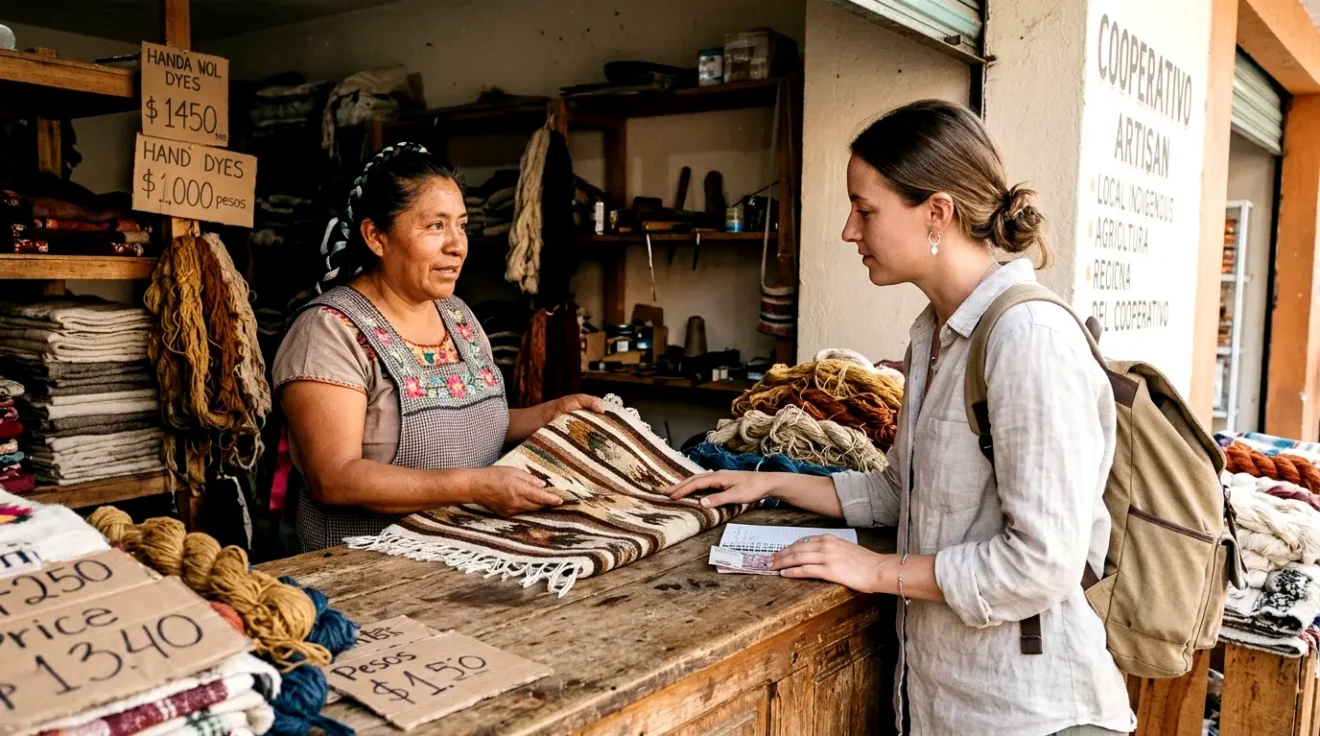
Ask how guides, performers and hosts are compensated. Check whether the operator identifies its community partners and whether the price is explained clearly. Local registration can help establish a business’s connection to a destination, but it cannot independently verify fair treatment.
When concerns arise during an experience, begin by assessing whether someone is being put at immediate risk or made uncomfortable. Stop taking photographs, avoid further intrusive participation and leave if continuing would contribute to the problem.
Where appropriate and safe, ask the operator about the practice or raise a specific concern. A question about consent or payment arrangements is more useful than an unsupported accusation.
Afterwards, consider whether to share a private complaint or a carefully worded public review. Avoid publishing identifiable images of vulnerable residents, particularly children. Documenting a concern should not reproduce the harm being criticised.
Travellers cannot audit every business completely. Nevertheless, choosing operators who explain their relationships with residents is a meaningful way to direct attention and spending towards more accountable experiences.
Responsible travel also depends on recognising that many everyday spaces are available to visitors without turning the people who use them into part of a tourism product.
Where to Experience Local Daily Life Without Intruding on Residents?
Travellers can experience local daily life most respectfully in public spaces and businesses where visitors are naturally welcome: markets, cafés, bakeries, public parks, accessible sporting events and public transport. These settings allow ordinary participation without requiring access to private homes or residential routines. The goal is to join everyday activities appropriately, not observe residents as cultural exhibits.
Public markets are useful because shopping already creates a legitimate interaction. Buying food, asking a trader about a product when they have time to answer or attending a public demonstration can reveal local habits without demanding a specially arranged performance.
Neighbourhood bakeries and cafés offer similarly straightforward opportunities. Visitors can support local businesses, try regional food and become familiar with a place through ordinary transactions.
Parks, public sporting events and community festivals provide another perspective. Participation should follow the same rules as it would for any resident: respect shared space, follow posted instructions and avoid disrupting organised activities.
The key distinction is participation versus observation. Someone purchasing groceries is using a market for its intended purpose. Someone lingering to photograph unfamiliar customers without permission is treating the same space as a spectacle.
The same principle applies to public transport. Riding a bus or train to reach a genuine destination is ordinary participation. Using crowded services solely to scrutinise commuters adds little understanding and may create unnecessary inconvenience.
Learn to recognise signals that your presence may be unwelcome:
- People repeatedly move away, stop an activity or appear uncomfortable when you approach.
- Signs indicate private access, restricted photography or residents-only facilities.
- A quiet residential area has no public-facing activity that reasonably explains your visit.
- Visitors gather around homes, doorways or individuals in ways that obstruct daily life.
Body language is culturally variable, so no single gesture proves discomfort. When uncertain, create space, ask a polite question where appropriate or move on.
There is also an important paradox in searching for an “authentic” neighbourhood. If increasing numbers of travellers arrive simply because a residential area is considered undiscovered, everyday life can become the attraction that changes the area’s character.
Choosing public and commercial spaces helps reduce that pressure. Buy from businesses that actively welcome customers, attend events that openly invite visitors and avoid sharing the locations of private homes as hidden travel discoveries.
Meaningful encounters rarely require access to someone’s personal life. A brief conversation with a willing shopkeeper may be more appropriate, and more revealing, than an hour spent watching people in a residential street.
Public spaces offer a natural starting point. Travellers seeking deeper interaction can then look for activities where communities explicitly invite newcomers to take part.
How to Join Everyday Community Activities While Travelling Abroad?
To join everyday community activities abroad, look for events that explicitly welcome newcomers or occasional participants. Public language exchanges, recreational group runs, community gardening sessions and open hobby workshops can provide accessible starting points. Contact organisers beforehand, explain that you are visiting temporarily and ask whether your participation would be useful rather than disruptive.
Not every community activity is designed for short-term visitors. A public language exchange may welcome someone attending once, while a long-term mentoring project may depend on continuity, trust or formal requirements.
Start with clearly advertised entry points:
- Language exchanges: Look for public sessions that allow newcomers and involve mutual conversation rather than one-sided language practice.
- Recreational group activities: Check whether community runs, open sports sessions or hobby meetups accept occasional participants.
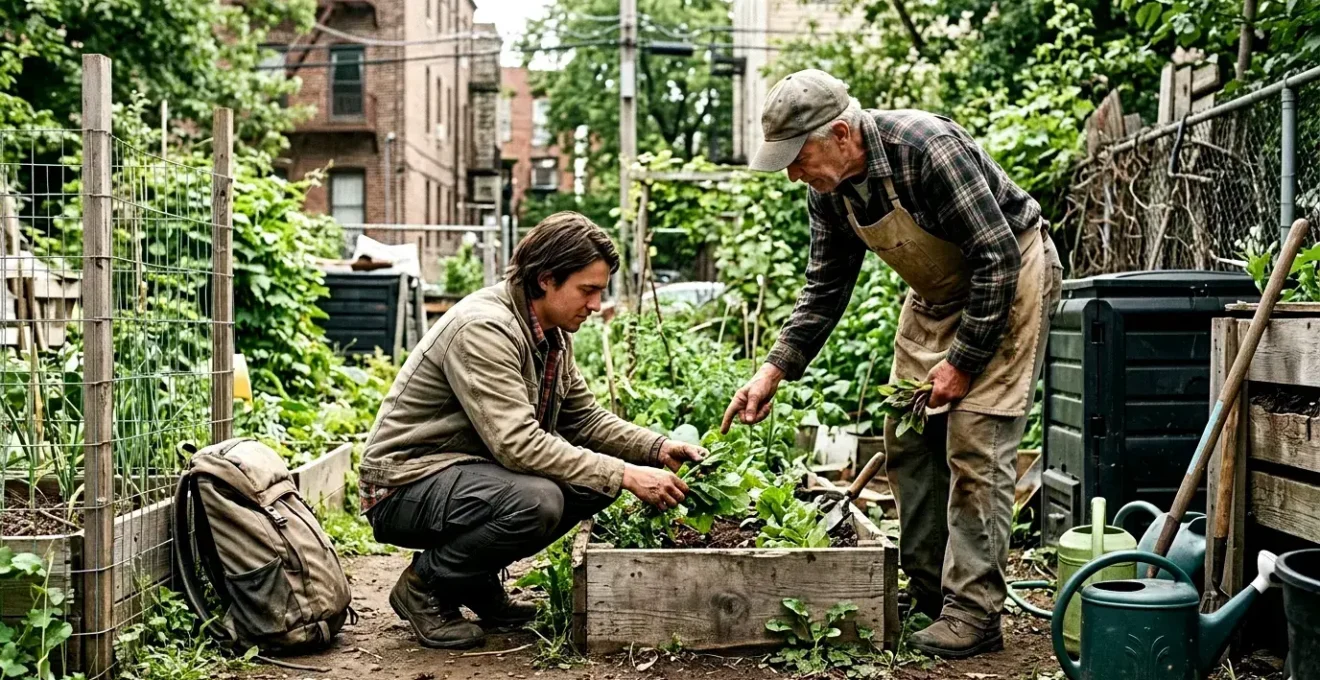
- Community gardens: Contact organisers about visitor days, supervision and appropriate tasks before arriving.
- Locally hosted cooking workshops: Choose sessions where hosts willingly teach participants, with clear prices, boundaries and permissions for the setting.
- Open religious or cultural gatherings: Attend only when visitors are explicitly welcome, and confirm whether active participation is appropriate.
The central question is what commitment the activity requires. A one-off workshop is usually structured differently from a programme that relies on members attending regularly.
For example, a community garden may have an advertised open session where newcomers can help with basic tasks. Turning up uninvited on another day could interrupt planned work or enter a space reserved for members.
A modest effort to communicate can make participation more comfortable. Learn a greeting, an expression of thanks and a simple way to explain your interest in the local language. Where possible, ask an organiser or resident to introduce you rather than approaching a group without context.
Introductions help establish expectations, but they are not guarantees of acceptance. Hosts remain free to decline participation or limit what they share.
Avoid approaching every activity as a source of authentic content. Communities are not responsible for creating memorable travel experiences on demand.
Instead, consider what you can contribute. This might involve paying a fair workshop fee, completing an agreed task, listening attentively or observing the group’s established rules without taking over the conversation.
Participation also creates responsibilities around photographs and personal stories. An invitation to join an activity does not automatically include permission to publish other participants’ images or describe private conversations online.
For short stays, activities designed for occasional attendance generally offer a more respectful fit than programmes requiring ongoing relationships or specialist training.
The strongest exchanges develop when visitors accept a community’s conditions rather than expecting special access. That awareness becomes even more important in places with religious or spiritual significance.
The Visitor Etiquette Mistakes That Can Offend People at Sacred Sites
Common etiquette mistakes at sacred sites include inappropriate clothing, taking photographs without permission, speaking loudly, entering restricted areas and disrupting worshippers. Expectations vary between religions, communities and individual locations. Travellers should research the specific site’s visitor requirements beforehand, follow instructions from authorised hosts and avoid assuming that access to a historic monument permits access to every religious space.
The deeper problem behind many offences is treating a place of worship primarily as a visual attraction. Architecture may be spectacular, but sacred spaces remain meaningful to the people who pray, gather or observe rituals there.
Before visiting, check the institution’s official website or contact its visitor team where possible. The Grand Valley State University‘s guidance on visiting sacred sites recommends checking clothing expectations, asking about photography and respecting restrictions established by hosts.
Several areas deserve particular attention:
- Dress: Confirm whether certain clothing, head coverings or footwear arrangements are required.
- Photography: Ask whether images are permitted and whether separate consent is needed to photograph individuals or ceremonies.
- Noise: Keep conversations and devices from interrupting worship, meditation or other activities.
- Movement: Observe designated entrances, circulation routes and any rules concerning particular areas.
- Participation: Do not imitate prayers or rituals merely for entertainment or photographs. Ask what participation, if any, is appropriate for visitors.
Sites that function as both historic monuments and active places of worship can present ambiguous situations. A building might welcome tourists in designated areas while reserving others for religious use.
When signs are unclear or instructions appear inconsistent, ask a responsible member of staff. Observe respectfully from a distance while seeking guidance, but do not assume that copying worshippers’ behaviour makes an action appropriate for visitors.
Rules may also change during services, festivals or periods of private observance. Previously permitted access does not guarantee permission on another occasion.
If you make a mistake, respond without defensiveness. Stop the behaviour, apologise briefly and follow the correction. Delete an image if an authorised host or photographed person asks you to do so, unless another overriding obligation applies.
A respectful response to correction often matters more than attempting to appear perfectly familiar with customs you are still learning.
Finally, recognise that some sacred practices are not open to visitors at all. Respecting exclusion is part of responsible cultural travel, not a missed opportunity that needs to be overcome.
Knowing when to observe, participate or withdraw helps travellers engage meaningfully even when their time in a destination is limited.
Key takeaways for a meaningful short stay
- Choose one activity with a clear local host and a purpose beyond entertaining visitors.
- Allow room for ordinary experiences instead of scheduling every hour around organised attractions.
- Measure the quality of a visit through mutual respect and appropriate participation, not the number of cultural encounters collected.
How to Experience Authentic Local Immersion During a Short Stay Abroad?
Authentic local immersion during a short stay is possible when travellers prioritise a few meaningful exchanges over an ambitious sightseeing schedule. Choose one responsibly hosted community activity, one independent experience of everyday public life and one event connected to the local calendar. This combination provides cultural context, ordinary participation and opportunities for genuine interaction without claiming complete immersion.
Limited time creates a genuine trade-off. Understanding a community usually requires repeated encounters, familiarity and trust. A brief visit can offer an introduction, but it cannot reproduce the knowledge or relationships that residents develop through years of living in a place.
Instead of trying to experience everything, plan around three complementary activities.
- One hosted experience: Book a resident-led walk, community workshop or other activity with clear participation rules and transparent financial arrangements.
- One independent daily-life activity: Visit a public market, eat at a neighbourhood business or use local transport for a practical journey.
- One locally scheduled event: Look for an openly advertised festival, public performance, recreational gathering or community programme taking place during your visit.
Consider a hypothetical two-day city break. On the first morning, a traveller joins a resident-guided historical walk. That afternoon, they return independently to a public market discussed during the tour, where they purchase ingredients and talk briefly with a willing trader.
On the following day, they attend an advertised community gardening session that accepts occasional volunteers. The organiser explains the work, and the traveller helps with an agreed task without photographing participants.
This hypothetical itinerary does not guarantee personal friendships or profound cultural insight. Its advantage is that each activity has a legitimate purpose and offers a different way to engage.
Deliberate local spending supports the same approach. Whenever practical, purchase directly from locally operated businesses, pay guides fairly and avoid activities whose relationship with residents remains unclear.
Apply the other principles consistently: respect residential boundaries, seek consent before photographing people, check sacred-site rules and accept that some activities are not available to temporary visitors.
A useful personal reflection at the end of the stay is whether anyone you encountered had the opportunity to relate to you as a guest or participant rather than simply as a customer.
Being remembered by a resident can be a meaningful sign of connection, but it is not a reliable test of authenticity. A short, mutually respectful interaction can still be valuable even when nobody remembers your name.
Depth is not necessarily measured by emotional intensity. Sometimes learning a little about an ordinary practice, contributing appropriately and leaving without disruption is a sufficient achievement.
Before your next journey, identify one publicly advertised resident-led activity, verify that temporary visitors are welcome and leave enough unscheduled time to experience the destination on its own terms.
Can a popular tourist attraction still offer an authentic cultural experience?
Yes. An attraction’s popularity does not determine whether its cultural content is meaningful. Resident involvement, accurate contextualisation, voluntary participation and appropriate financial benefits matter more than visitor numbers alone. An established attraction can support living traditions, while an obscure experience can still be intrusive or exploitative.
How can travellers find local activities without speaking the local language?
Start with public community calendars, libraries, visitor information centres and organisers who explicitly welcome newcomers. Translation tools can help with basic enquiries, but should not replace confirmation that visitors are welcome. Learning a greeting and a few practical expressions demonstrates consideration without assuming that residents must communicate in English.
Is it acceptable to photograph people in public markets or community events?
Public access does not automatically make photography welcome or legally unrestricted. Ask permission before taking identifiable photographs of individuals, especially in sensitive situations. Follow venue rules and applicable local privacy requirements. If someone declines or objects, respect their preference rather than treating the photograph as an entitlement.
How can travellers tell whether a community tourism initiative genuinely benefits residents?
Look for clear explanations of ownership, resident participation, decision-making and payment arrangements. Ask who designed the experience and how guides, performers or other hosts are compensated. Community ownership can support local economic benefits, but claims of positive impact should not be treated as guarantees without supporting information.
What should a traveller do when a local event appears to welcome only residents?
Check whether the event is publicly open and whether organisers accept occasional visitors. If permission is uncertain, contact the host rather than arriving uninvited. A residents-only event should remain residents-only. Travellers can seek alternatives specifically designed to welcome guests without pressuring a community to change its boundaries.