
A successful three-day city break depends less on how many attractions you visit than on how intelligently you connect them. Three days might sound generous, but airport transfers, hotel check-ins, restaurant stops and timed-entry reservations can quickly reduce your available sightseeing hours.
The most effective approach is to organise each day around one compact geographical area, choose accommodation that supports your walking routes and reserve only the attractions that genuinely require advance planning. Instead of crossing the city repeatedly, you move naturally between neighbouring landmarks, cafés and districts.
This principle works across European destinations, although each city introduces different constraints. Budapest’s river divides its principal sightseeing areas, Rome requires careful coordination of major attraction bookings, and Prague’s historical centre presents different walking challenges from Vienna’s broader cultural landscape.
With a few deliberate decisions before departure, even a late arrival or an unexpected museum closure can become manageable rather than disruptive.
Three-day city break planning essentials
- Divide your itinerary into geographical clusters, dedicating each full day to one district or connected group of attractions.
- Choose accommodation based on your evening activities, airport connections and sightseeing priorities rather than hotel views alone.
- Book essential timed-entry attractions in advance, verify opening calendars and leave flexible space for delays and discoveries.
- Why Does Staying Across the River Matter on a Weekend in Budapest?
- How to Explore Rome in Three Days Without Constantly Crossing the City?
- Prague or Vienna: Which Is Better for a First Two-Night City Break?
- The Museum Opening-Hours Mistake That Can Disrupt a Monday City Break
- How to Spend a Late Arrival Evening Without Wasting a City Break?
- How to Read Metro Maps and Make Connections in a Foreign City?
- The Ticket Resale Scams to Avoid at Popular European Landmarks
- How to Visit Major Attractions Without Losing Hours in Tourist Queues?
Why Does Staying Across the River Matter on a Weekend in Budapest?
Choosing between Buda and Pest affects how much of a Budapest weekend you spend walking, sightseeing or crossing the Danube. Pest generally offers convenient access to central restaurants, nightlife and many urban attractions, while Buda places you closer to the Castle District and elevated viewpoints. The best base depends on where your planned activities are concentrated.
Budapest’s two sides provide contrasting experiences. Pest contains lively central neighbourhoods, shopping streets, the Hungarian Parliament Building and many popular dining areas. Buda offers Castle Hill, historic streets and panoramic views over the river.
The Danube is therefore more than a scenic landmark: it shapes the geography of your itinerary. Crossing between the two sides can be enjoyable, but repeated crossings introduce unnecessary detours when attractions have not been grouped logically.
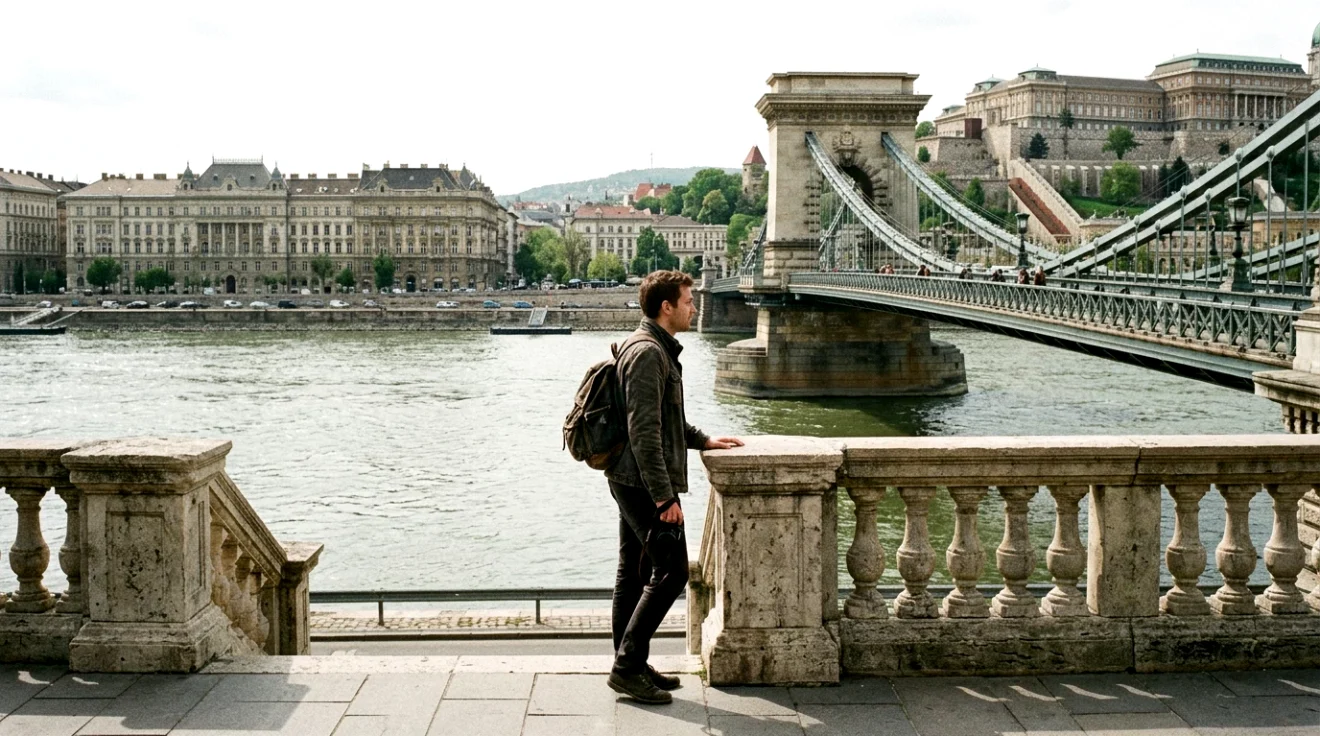
For a short stay, consider accommodation near the Chain Bridge approaches or within convenient reach of the M2 metro corridor. These locations can provide a practical connection between the two riverbanks, allowing you to switch districts without rebuilding your entire itinerary.
However, a river-view hotel is not automatically the most efficient choice. An attractive property on a quieter stretch of waterfront might be farther from the restaurants or evening entertainment you intend to visit. Depending on its exact location, that could add 20–30 minutes of walking to an evening outing.
A simple decision rule keeps planning manageable:
- Mostly Pest attractions: stay in Pest and dedicate one half-day to Buda Castle and its surroundings.
- Mostly Castle District activities: consider Buda, particularly if quieter evenings are a priority.
- Balanced sightseeing: favour convenient bridge or metro access rather than choosing solely by riverbank.
Once accommodation supports your sightseeing pattern, apply the same geographical logic to cities where distance and reservation times create even greater planning challenges.
How to Explore Rome in Three Days Without Constantly Crossing the City?
The most practical way to explore Rome in three days is to assign one main sightseeing district to each day: Ancient Rome, the Vatican area and the Centro Storico. Arrange nearby attractions around those geographical anchors, then fit mandatory reservation times into the route. This reduces repeated cross-city journeys without sacrificing Rome’s major historical experiences.
Rome is particularly unforgiving of itineraries built as lists of disconnected landmarks. The Colosseum, Vatican Museums, Pantheon and Trastevere are appealing destinations, but attempting to visit them in an arbitrary sequence can create long transfers and rushed encounters.
A better strategy is the anchor district method: select one primary area for the day, then add nearby attractions only when they fit comfortably around your main activity.
The following is an illustrative three-day arrangement, not a fixed schedule:
| Day | Anchor district | Suggested sightseeing flow |
|---|---|---|
| Day 1 | Ancient Rome | Colosseum, Roman Forum, Palatine Hill and nearby streets |
| Day 2 | Vatican area | Vatican Museums, St Peter’s Square and surrounding neighbourhoods |
| Day 3 | Centro Storico | Pantheon area, Piazza Navona, nearby squares and flexible café stops |
Rome’s booking systems make reservation windows more important than straight-line distances. According to the Colosseum Archaeological Park opening times and tickets, Colosseum admission requires a reserved entry time, and ticket sales open 30 days before the intended visit.
For the published period from 25 October 2026 to 28 February 2027, the Colosseum opens at 8:30 a.m. and closes at 4:30 p.m., with last admission at 3:30 p.m. Other seasons have different operating hours, so always check the dates relevant to your trip.
The standard Colosseum, Roman Forum and Palatine ticket carries a 24-hour validity period and specific admission conditions. Other ticket categories, including some Full Experience options, operate differently. Your chosen ticket determines how to arrange these visits.
The Vatican Museums likewise operate their own calendar and booking system. Avoid treating the Colosseum and Vatican Museums as interchangeable appointments that can simply be moved to another hour.
When deciding what to remove from a crowded schedule, use proximity rather than popularity. If an attraction requires a major detour away from the day’s anchor, move it to a compatible day or remove it altogether.
Three days are better spent experiencing two or three areas meaningfully than attempting to tick off 15 major landmarks. Allow time for meals, spontaneous stops and the slower pace of Rome’s historic streets.
This district-based approach also helps when comparing destinations before booking: some European capitals naturally reward walking, while others benefit from a greater reliance on public transport.
Prague or Vienna: Which Is Better for a First Two-Night City Break?
Prague is often the more straightforward choice for travellers seeking a compact historic sightseeing experience over two nights, while Vienna suits visitors who prioritise museums, classical music, cafés and an extensive public transport network. The deciding factors are not simply the number of attractions, but walking terrain, accommodation location and the time spent travelling from the airport.
Prague’s historical attractions can be connected through a continuous walking route. Prague Castle, Lesser Town, Charles Bridge and Old Town form a recognisable sequence that lets visitors experience multiple neighbourhoods without repeatedly changing transport.
The Prague City Tourism‘s one-day walking itinerary follows this geographical logic, beginning around Prague Castle, descending towards Lesser Town and crossing Charles Bridge into Old Town.
However, compact does not necessarily mean effortless. Castle-area slopes, stairways and cobbled streets can make a compressed route tiring, especially with luggage or limited mobility. Starting near the Castle District and walking downhill can be more comfortable than repeatedly climbing towards it.
Vienna presents a different planning opportunity. Much of the central historic area is walkable, while attractions beyond it can be incorporated using trams and underground services. A visitor interested in several museums or cultural venues may find it more comfortable to organise the trip around neighbourhoods and transit connections rather than completing one long walking circuit.
| Planning factor | Prague | Vienna |
|---|---|---|
| Historic sightseeing | Major central landmarks connect through a compact walking route | Strong central cluster with additional attractions farther out |
| Walking conditions | Castle-area hills, steps and cobblestones | Relatively level central routes, with terrain varying outside the centre |
| Transport approach | Walking can cover much of a historic-centre itinerary | Walking complemented by trams and underground services |
| Ideal priorities | Historic atmosphere, viewpoints and picturesque streets | Museums, music, architecture and café culture |
| Short-stay consideration | Walking effort and accommodation access | Transport connections and attraction distribution |
Airport logistics can change the result. Flight arrival times, direct-flight availability, hotel prices and door-to-door transfer arrangements should be compared for your actual travel dates, rather than relying on broad assumptions about which capital is cheaper or easier to reach.
Vienna has a particularly relevant temporary consideration: rail infrastructure works affecting airport connections through October 2027. The Vienna Tourist Board’s airport transport disruption notice explains the replacement services and available rail alternatives.
During the published disruption, the City Airport Train is replaced by a bus service between the airport and Wien Mitte/Landstrasse, with a stated journey time of 21 minutes. This does not include waiting, luggage collection or onward travel to your hotel.
Before choosing either city, compare the total journey from your departure airport to your accommodation. For a two-night getaway, an inconvenient arrival or departure can outweigh a destination’s sightseeing advantages.
Whichever city you choose, the next essential check is its attraction calendar: the wrong museum day can undo even an otherwise excellent itinerary.
The Museum Opening-Hours Mistake That Can Disrupt a Monday City Break
The biggest Monday planning mistake is assuming that major museums follow the same opening schedule every day. Many European institutions close on Mondays, while others remain open or apply different holiday arrangements. A three-day itinerary built without checking individual calendars may leave its main indoor attraction unavailable precisely when the traveller planned to visit.
Weekend itineraries can conceal the problem. Travellers arriving on Friday and departing on Sunday may never encounter weekday closures, whereas a Saturday-to-Monday trip places its final sightseeing hours at greater risk.
However, Monday closure is a pattern, not a universal rule. The Vatican Museums, for example, publish regular Monday-to-Saturday opening hours, subject to their official closure calendar. Their usual timetable is 8:00 a.m. to 8:00 p.m., with final admission at 6:00 p.m.
The Colosseum Archaeological Park also demonstrates why checking individual sites matters: its published visitor information specifically identifies the House of Augustus as closed on Mondays, without establishing that every attraction in the archaeological complex follows that rule.
To avoid a scheduling mistake, verify the museum’s official website and any relevant national or municipal museum portal during the week before departure. Look for exceptional closures, public holidays, reduced hours and free-admission dates.
If the flagship museum is unavailable on Monday, replace it with geographically convenient alternatives rather than travelling across the city in search of another major institution.
- Explore historic neighbourhoods and architectural streetscapes.
- Visit parks and public viewpoints that are accessible on your chosen date.
- Check opening times for churches, markets and smaller attractions.
- Schedule outdoor photography or a relaxed food-focused walk.
An additional consideration is crowd redistribution. When a popular museum is closed, some visitors may choose other open attractions instead. This is a planning risk rather than a predictable numerical increase in queues, so check reservation availability for any replacement venue.
Free-entry days also need individual verification. For example, the Vatican Museums publish free admission on the last Sunday of the month, subject to calendar exceptions, while the Colosseum Archaeological Park lists the first Sunday of each month among its free-admission occasions.
Once opening days are confirmed, consider the less obvious scheduling problem: how to use the evening before your first full sightseeing day without creating more commitments than your arrival allows.
How to Spend a Late Arrival Evening Without Wasting a City Break?
A late arrival does not have to mean losing an entire evening of your city break. Treat it as a short, flexible orientation session around your accommodation rather than an additional sightseeing day. A nearby dinner, an accessible viewpoint and a brief neighbourhood walk can introduce the city without relying on reservations or demanding travel connections.
The key is to keep the first evening geographically small. Instead of crossing the city to visit a famous landmark, focus on places within a comfortable walking distance of your hotel.
For example, a hypothetical traveller arriving at their accommodation around 9:00 p.m. might choose a nearby restaurant, walk through one central square and identify the closest transport stop before returning to rest. The sequence can be shortened or abandoned if the flight is delayed.
Do not treat a suggested 30–60-minute orientation walk as an obligation. Actual distance, local safety conditions, restaurant hours and fatigue should determine what is realistic.
Arrival evenings are particularly useful for practical preparation. Locate the entrance to your nearest metro or tram station, identify a convenient breakfast option and check which streets provide easy access to the next day’s sightseeing area.
Keep the first night’s plans reservation-free wherever possible. Delayed flights, baggage collection and unexpected airport transfers can make prepaid dining experiences or timed attractions difficult to reach.
A late landing also affects the following morning. If you arrive at your accommodation well after midnight, an early museum booking may create unnecessary pressure. Where the booking calendar allows, place your most restrictive timed-entry experiences on the second or third day.
The principle is simple: protect sleep and flexibility before protecting an ambitious attraction count.
Five checks to complete before your three-day city break
- Map your main attractions: save a city map with your preferred sights grouped into three geographical areas.
- Check your accommodation: record the walking route from your hotel to the nearest useful transport stop and evening dining area.
- Confirm attraction calendars: produce a short list of opening days, exceptional closures and required entry reservations.
- Prepare your arrival plan: identify one flexible dinner option and one short orientation walk near your hotel.
- Protect your schedule: save an itinerary showing your essential bookings alongside unreserved periods and alternative activities.
By the following morning, the main challenge is no longer arrival logistics but choosing the most efficient way to move between your planned stops.
How to Read Metro Maps and Make Connections in a Foreign City?
Reading a foreign city’s metro map becomes easier when you separate the network diagram from the city’s actual geography. First identify your destination line and the direction shown by its terminal station, then compare the route with a street map. A journey involving multiple transfers may be slower or less convenient than walking directly between nearby attractions.
Metro diagrams prioritise clarity over geographical accuracy. Lines are simplified, distances are compressed and intersections may appear closer together than they are in reality.
That means two stations that look far apart on a schematic map may be only a short walk away, while a seemingly straightforward transfer could require navigating several corridors, escalators or platforms.
The best route is not necessarily the one with the fewest stops. Consider walking distance, transfer complexity, luggage and station accessibility before choosing between public transport and walking.
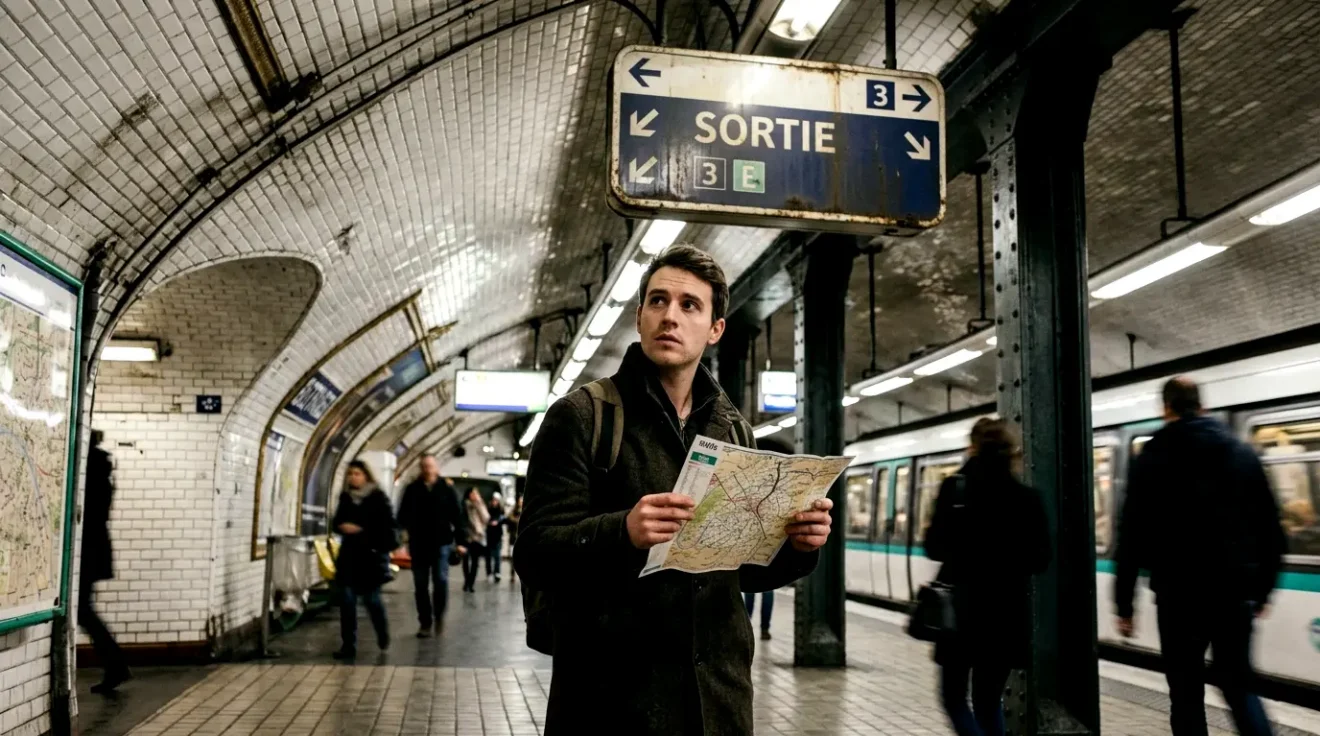
When comparing possible connections, favour simpler interchanges when the total journey is comparable. A direct service or a convenient cross-platform transfer may be easier than navigating a large multi-line station, particularly with luggage.
However, station size alone does not determine transfer difficulty. A well-signposted major interchange can be more efficient than a smaller station requiring an awkward platform change. Use operator maps and accessibility information whenever the distinction matters.
Fares introduce another variable. European urban networks do not share one universal ticketing system, so investigate the rules of the city you are visiting before buying a travel pass.
- Zones: establish whether your accommodation, airport and attractions fall within the same fare area.
- Airport supplements: check whether standard urban tickets cover your airport journey.
- Ticket duration: compare the cost and validity of individual journeys with available day passes.
- Contactless payment: verify whether payment cards are accepted and whether tapping in, tapping out or additional validation is required.
During peak periods, prepare the journey before entering the station. Metro platforms frequently display the terminal destination rather than a simple compass direction, so knowing the correct end-of-line name helps prevent boarding the wrong train.
Also identify your intended exit in advance. Large stations may serve several streets or squares, and emerging on the wrong side can add an unnecessary walking detour.
For a short city break, public transport should complement a well-grouped itinerary rather than become the main activity of the day.
Efficient movement creates more time for the attractions themselves, but the advantages disappear if an unreliable ticket purchase prevents you from entering.
The Ticket Resale Scams to Avoid at Popular European Landmarks
Ticket-related scams and misleading sales practices around popular European landmarks commonly exploit urgency, unclear seller identities and official-looking branding. Travellers should verify the venue’s authorised ticketing website, compare the advertised price with the official offer and confirm entry conditions before paying. Unofficial resale becomes especially risky when admission depends on named tickets or specific time slots.
Several situations deserve particular caution. A seller near an attraction may advertise immediate entry or a premium skip-the-line experience without clearly explaining what the ticket includes. Other sellers may package admission with guiding services or additional fees that are not obvious at first glance.
Online, similar-looking booking domains can create the impression of an official relationship with the venue. A higher price does not automatically establish fraud, but misleading branding, undisclosed charges or unverifiable admission rights are reasons to investigate before purchasing.
The Vatican Museums provide a documented example. Their official visitor information explicitly warns about websites using domains similar to the institution’s official ticketing portal, which may charge substantially higher prices.
The Vatican Museums identify their authorised online ticket portal as tickets.museivaticani.va. Travellers should reach that portal through the institution’s official website rather than assuming a search advertisement or similarly named domain is legitimate.
Before completing any purchase, verify the following:
- The seller is the attraction’s official ticketing service or an explicitly identified authorised partner.
- The ticket covers the attraction, date, time slot and visitor category you need.
- Any additional service fees are clearly disclosed before payment.
- The booking’s cancellation, modification and refund conditions are understandable.
- Any identification requirements match the names and details on the tickets.
Be especially careful with attractions or public spaces that normally allow free access. Some legitimate guided experiences charge for services around these locations, but a seller claiming that payment is compulsory for ordinary access should be checked against the venue’s own admission information.
Urgency is a common pressure tactic. Statements such as “the last available slot is closing” should not override basic verification. Comparing the seller’s offer with the official booking page before paying can reveal significant differences in price or validity.
If you suspect that you have purchased an invalid or misleading ticket, preserve the booking confirmation, payment records and seller correspondence. Contact your payment provider promptly to ask about available dispute options and applicable deadlines, which depend on the provider and circumstances. Where fraud is suspected, report the incident to the appropriate local police or consumer-protection authority.
Recovery is not guaranteed, and a payment dispute does not automatically establish that the seller acted illegally. Preventive verification is therefore more reliable than assuming an unsuccessful booking can always be refunded.
Once ticket validity is established, the final planning decision is how to schedule popular attractions without turning every hour of the trip into another fixed appointment.
Key takeaways before booking major attractions
- Separate attractions with mandatory reservation or security procedures from those that can be visited spontaneously.
- Prioritise legitimate admission and geographically convenient entry times over promotional promises of instant access.
- Protect enough unreserved time for meals, transfers and unexpected discoveries so one delay does not disrupt the entire day.
How to Visit Major Attractions Without Losing Hours in Tourist Queues?
The most effective way to reduce time spent in attraction queues is to reserve compulsory or limited-capacity entry slots first, consider quieter visiting periods where supported by venue information and avoid concentrating too many high-demand landmarks into one day. Advance booking can improve predictability, but it does not guarantee immediate admission or eliminate security checks.
A successful queue-management strategy begins by understanding why a line exists. Some attractions restrict admissions because of capacity, while others require security screening, identity checks or access through controlled entrances.
In these situations, a reservation may establish when you are permitted to enter without removing every stage of the arrival process.
Use the following hierarchy when organising your sightseeing schedule:
- Book essential timed-entry attractions first. Prioritise sites where reservations are compulsory, admission capacity is limited or missing a slot would undermine the day’s main objective.
- Choose visiting times carefully. Early-opening or later available slots may be worth considering, but check venue-specific evidence before assuming they always mean shorter queues.
- Review official ticket combinations and access arrangements. A combined ticket may simplify visits to neighbouring sites, while alternative entrances should only be used when officially designated for your ticket or visitor category.
The Colosseum is a practical example of a venue where advance organisation matters. Its official booking system requires a specific admission slot, and different ticket categories permit different experiences within the archaeological park.
Even with a valid reservation, travellers should allow for entry formalities and follow the instructions attached to their ticket. A booked time should be treated as an admission requirement, not a promise of zero waiting.
Crowding patterns also vary by venue and date. Free-entry days, local events, organised tour groups or cruise passenger arrivals may influence demand, but their impact should not be assumed without relevant information.
Where available, consult the attraction’s official visitor updates, reservation availability and crowd information in mapping applications. These indicators may help identify busy periods, although they are not guarantees of future queue lengths.
For a three-day city break, reserve only the two or three experiences that truly justify a fixed appointment. Leave smaller attractions, scenic walks, cafés and neighbourhood exploration flexible whenever their admission conditions allow it.
Consider a hypothetical day in Rome with one reserved major attraction in the morning. Rather than immediately booking another distant landmark, use the afternoon for nearby streets, a relaxed lunch and one optional museum or viewpoint. If the morning visit runs longer than expected, the rest of the day’s structure still works.
The same principle applies in Budapest, Prague and Vienna. Combining nearby activities reduces the need to calculate exact transfer times between every reservation.
Build deliberate gaps into your itinerary. An unbooked hour is not necessarily wasted time: it can absorb a late lunch, a slower museum visit, a transport interruption or an unexpected discovery.
Before departure, save a simple three-day itinerary with one geographical focus per day, the confirmed admission times that matter and several optional nearby stops. Use it as a flexible guide rather than a timetable to complete at all costs.
How many attractions should you plan per day on a city break?
A practical starting point is one major attraction or substantial visit per half-day, with smaller nearby stops added according to opening hours, walking distances and personal interests. Some museums require several hours, while outdoor landmarks may need much less. Plan around realistic visit durations rather than setting an arbitrary daily target.
Is it better to stay near the airport or in the city centre for three days?
Central accommodation is often more practical when most sightseeing and evening activities are concentrated downtown. An airport hotel can make sense for a particularly early departure or an unusual flight schedule, but compare the complete journeys to your planned attractions before deciding. The best choice minimises the travel you will repeat, not necessarily your first transfer.
Should you buy a public transport pass for a short European city break?
Not automatically. Compare the valid single-ticket fares for your expected journeys against the available day-pass price, checking zones, airport coverage, validation requirements and ticket duration. Travellers staying within a compact historic centre may walk enough that individual tickets are more appropriate than an unlimited travel pass.
How far in advance should you book popular European attractions?
Booking windows vary by attraction. The Colosseum’s published ticket arrangements, for example, open sales 30 days before the intended visit and require a specific entry slot. Check each venue’s official calendar and reservation rules before departure rather than applying a single booking deadline to every destination.
What should you do if bad weather disrupts a walking-based itinerary?
Keep one or two indoor alternatives within each day’s sightseeing district, such as a museum, gallery or suitable cultural venue with verified opening hours. Move outdoor viewpoints or extended walks to a more favourable period when possible. Maintaining the same geographical focus helps avoid additional travel simply because the weather changes.